When a product can't support its own roadmap, what does it take to make the case for rebuilding from the ground up?
Workday · Senior Associate Product Designer · Vision work
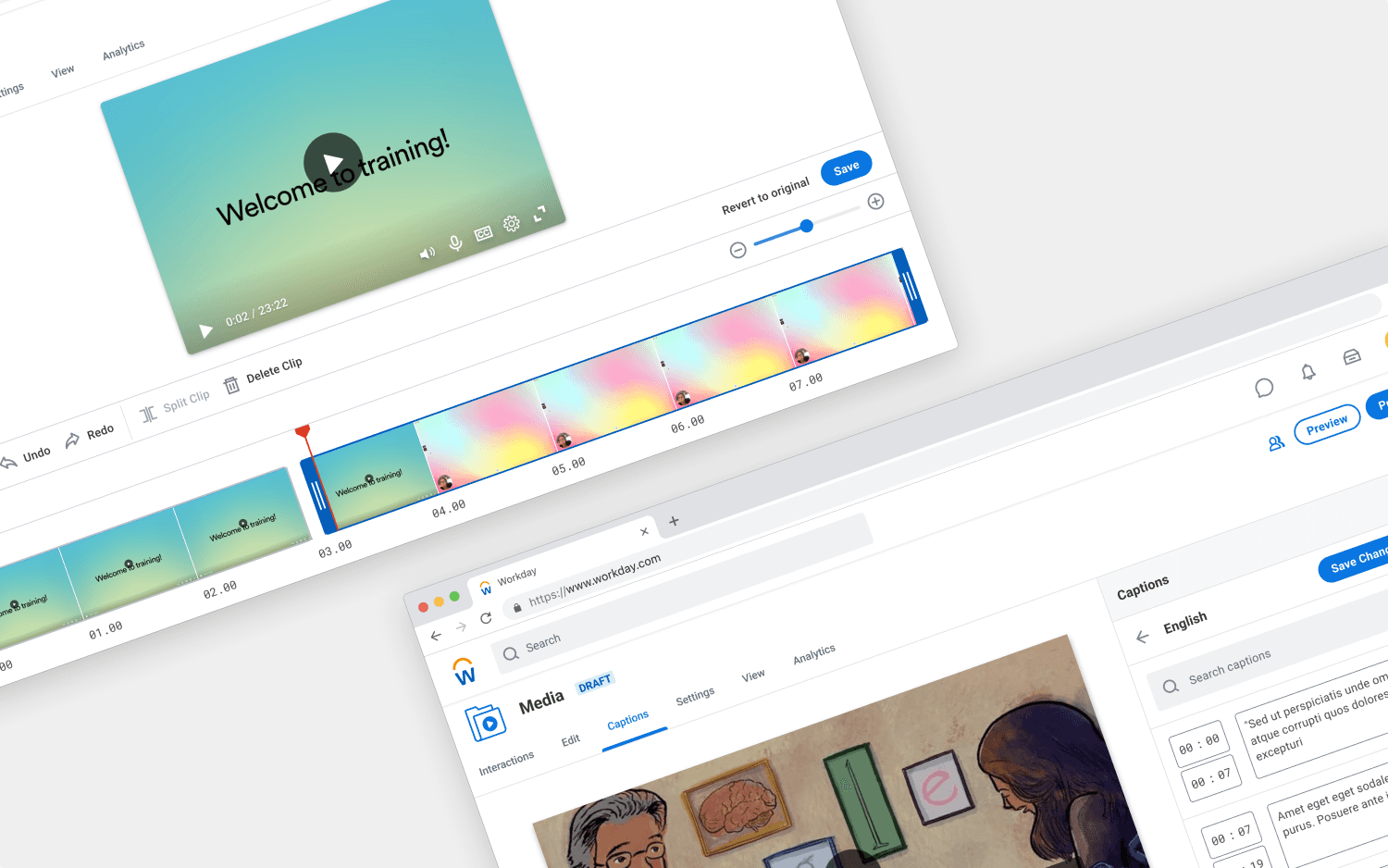
A product with big ambitions and bigger problems
Media is Workday's video authoring and publishing tool — embedded across Learning, Announcements, and other apps. Leadership's vision was compelling: video as the future of employee engagement, Media as a platform differentiator. The product told a different story.
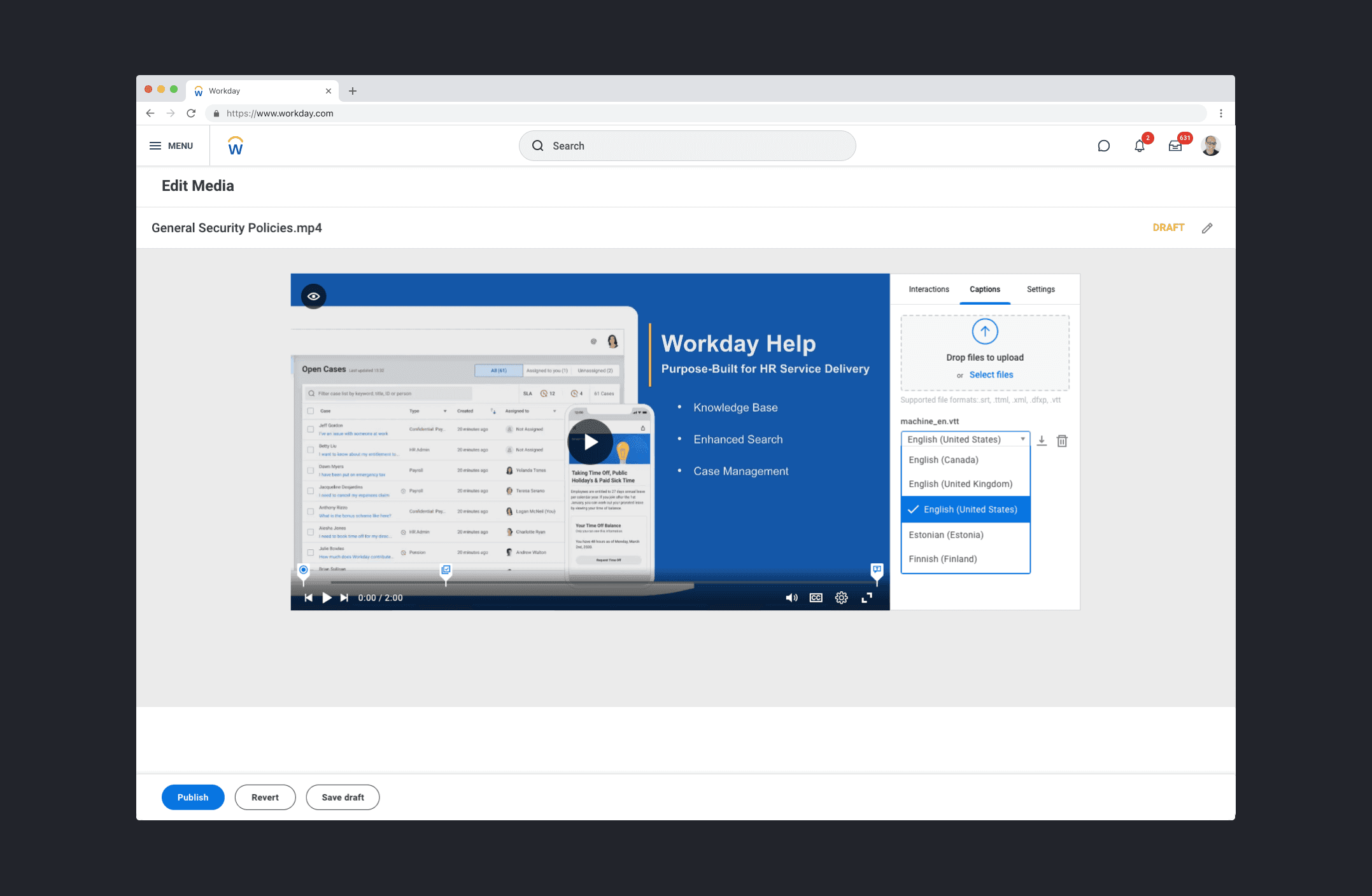
Outdated Media design featuring the interactions builder panel
A painful gap between vision and reality
Research I conducted across accessibility, global user support, and the interactions editor kept surfacing the same finding: users were abandoning the tool mid-workflow and completing critical tasks in third-party products. The architecture was the problem — every feature was coupled directly to individual video files. Update a video, lose all associated interactions. Build a question bank across videos? Not possible. Add new features? You'd be duct-taping them on.
Nobody had named this as the reason the roadmap wasn't achievable. I did.
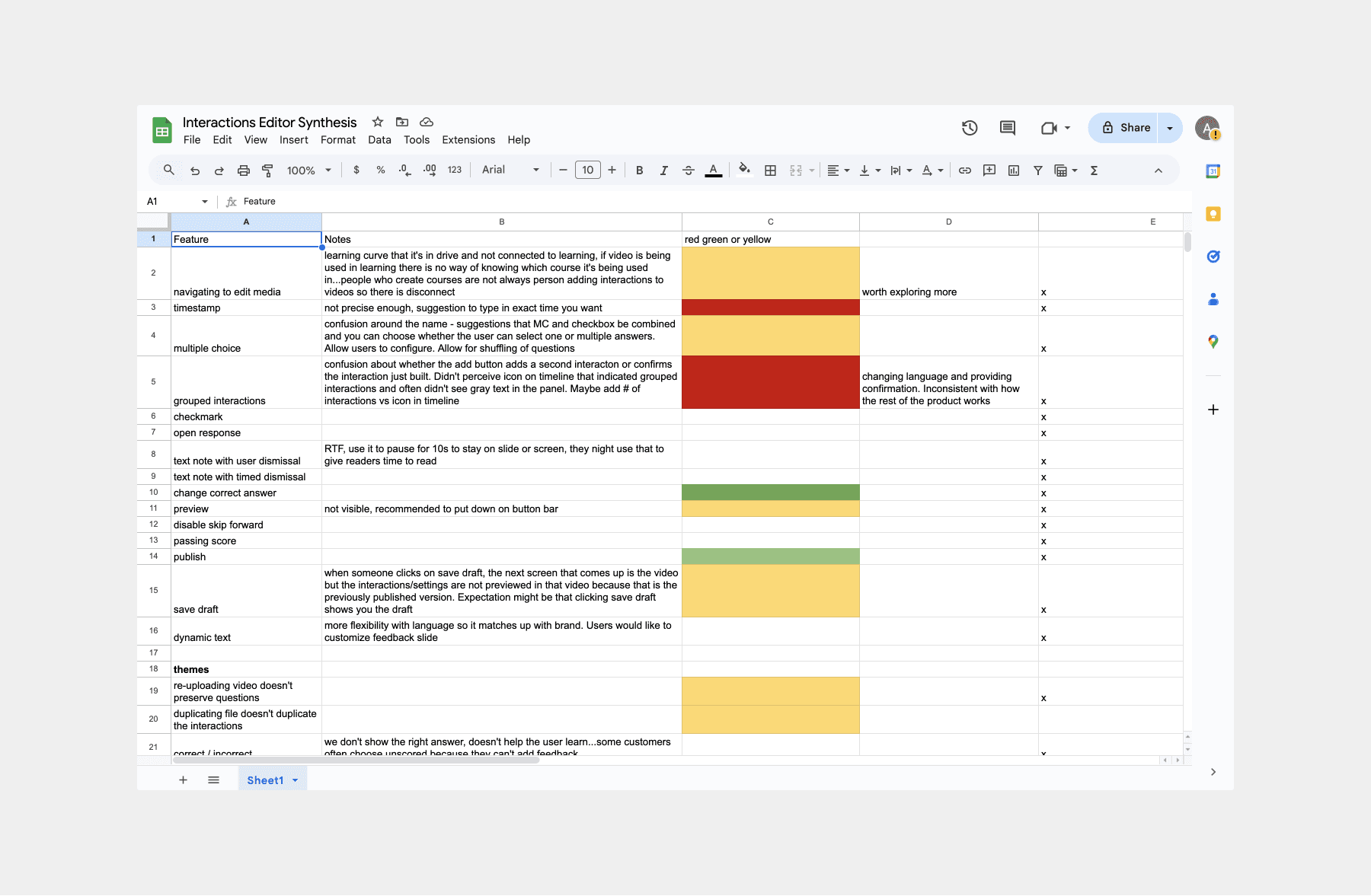
Synthesis sheet of results from user interviews exploring the interactions editor
The case had to be made from scratch
No one asked for a redesign. I spent months in PM conversations framing the structural problem — not as "we should rebuild this" but as "here's why the roadmap doesn't fit the product." I built consensus across the full PM team before navigating friction from a higher-level stakeholder whose own strategy work overlapped with mine.
Synthesis sheet of results from user interviews exploring the interactions editor
Aligning the team on what we already knew
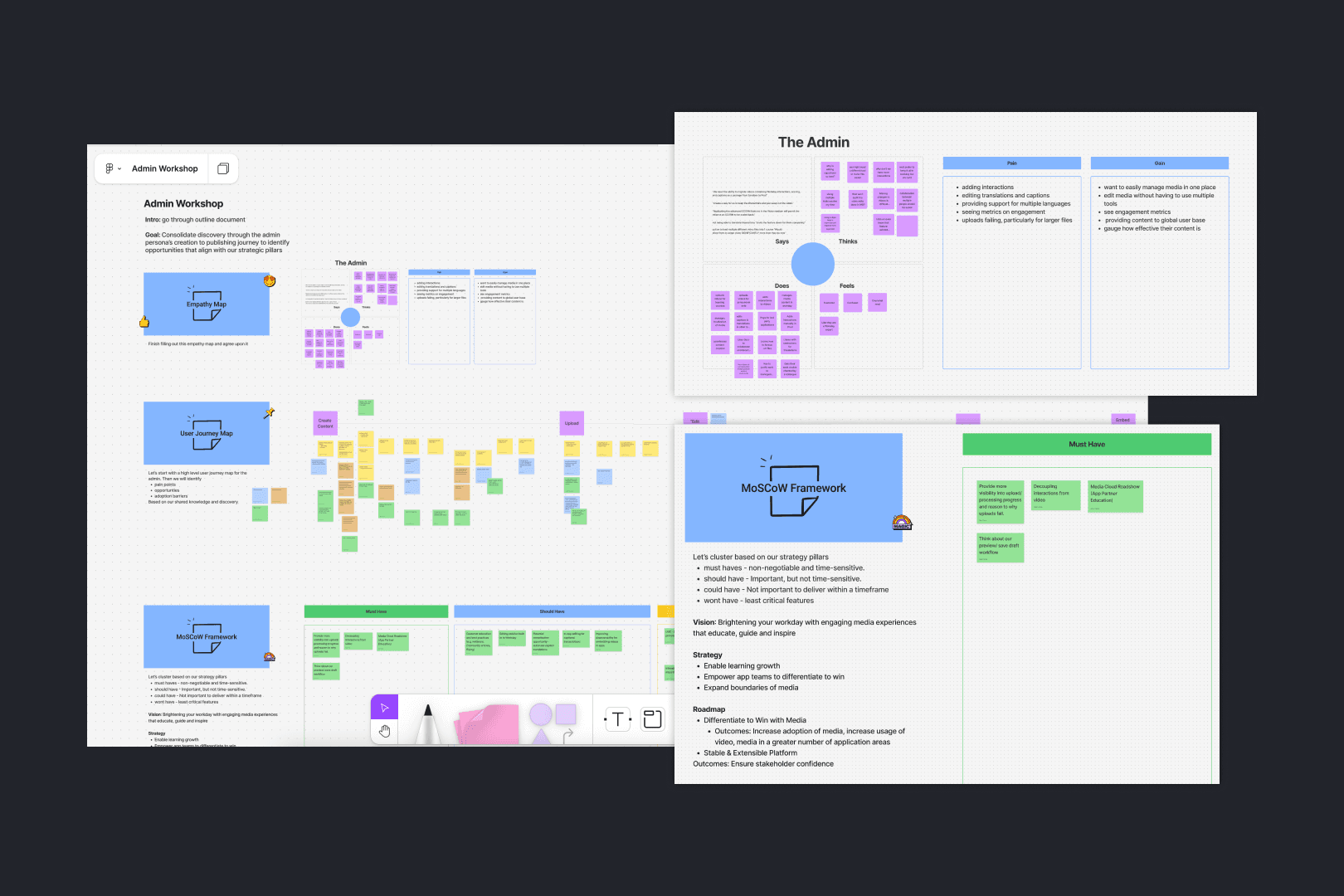
Rather than proposing more research, I synthesized two existing rounds of pain point studies alongside my own testing. I then facilitated a knowledge-share workshop with PMs across Media's product areas — mapping the full admin journey and using the MoSCoW framework to prioritize.
Must-haves that emerged:
Decoupling interactions from individual videos
In-app caption and transcription editing
Automating caption translations for multi-language support
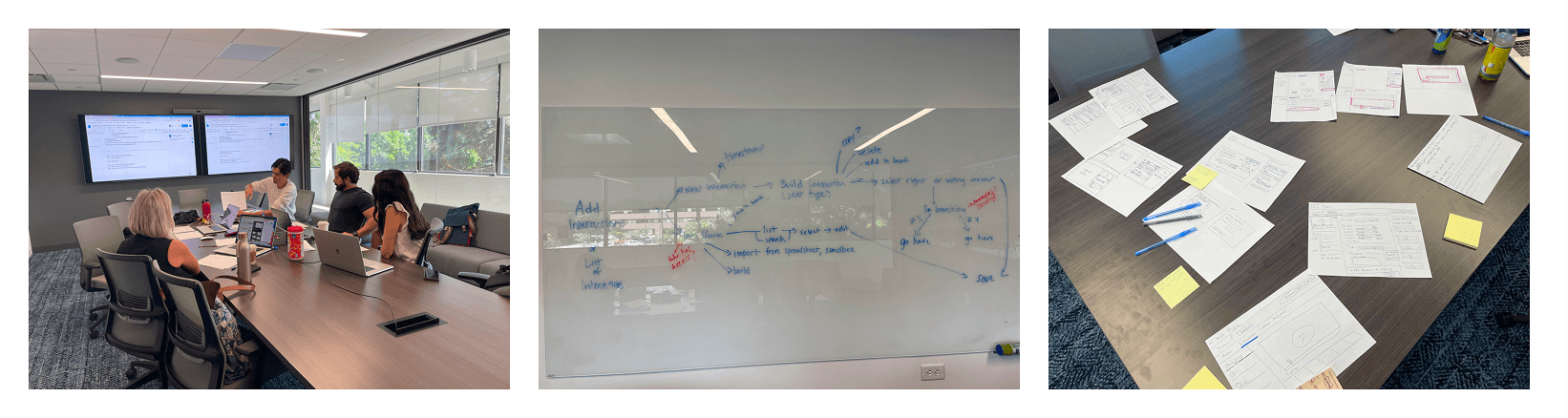
I led a 2-day mini design sprint to collaborate on coming up with different possible design solutions
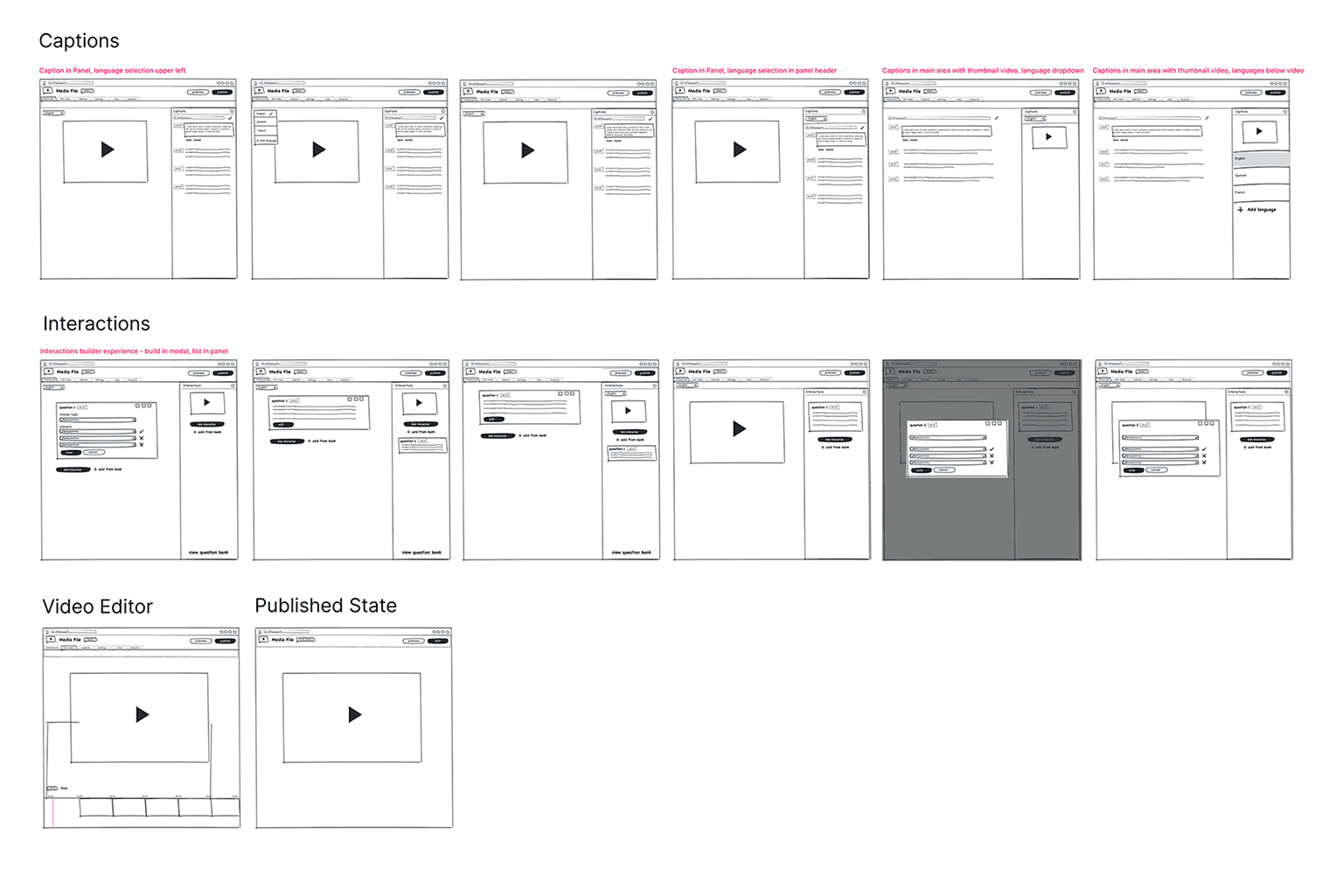
Low-fidelity wireframes resulting from the sketches from the workshop
A workspace for video. Not a video with a workspace.
I organized a two-day design sprint with designers across my org. Day one: problem immersion and competitive analysis. Day two: Crazy Eights, sketching, and voting on concepts.
The central insight: Media needed a framework agnostic of the video. A persistent workspace where content and interactions lived above the video file — not attached to it. From sprint sketches, I produced lo-fi through high-fidelity mockups, landing on a tab navigation and contextual panel system built for extensibility.
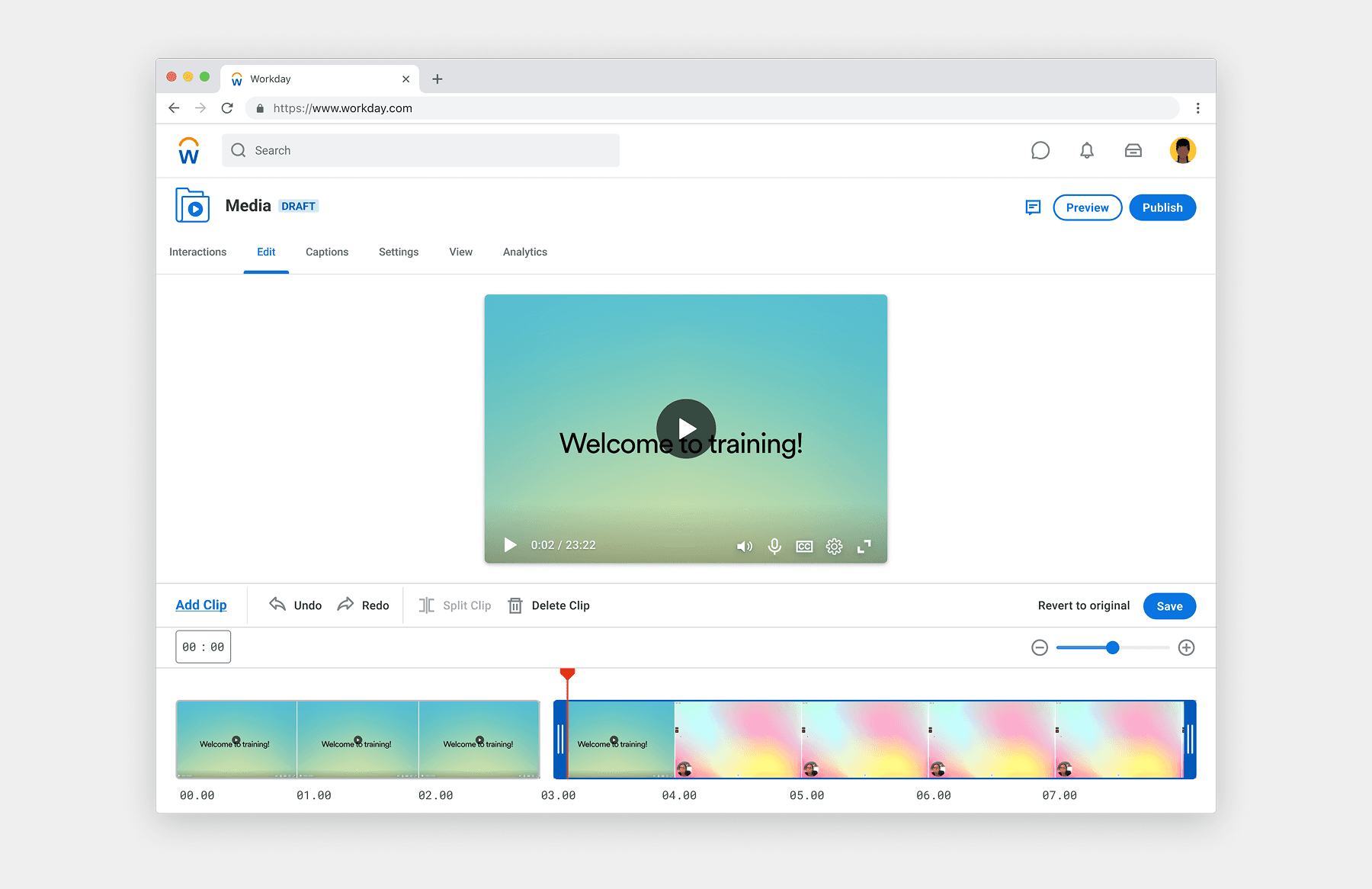
Simple split and trim video editor design as requested by users
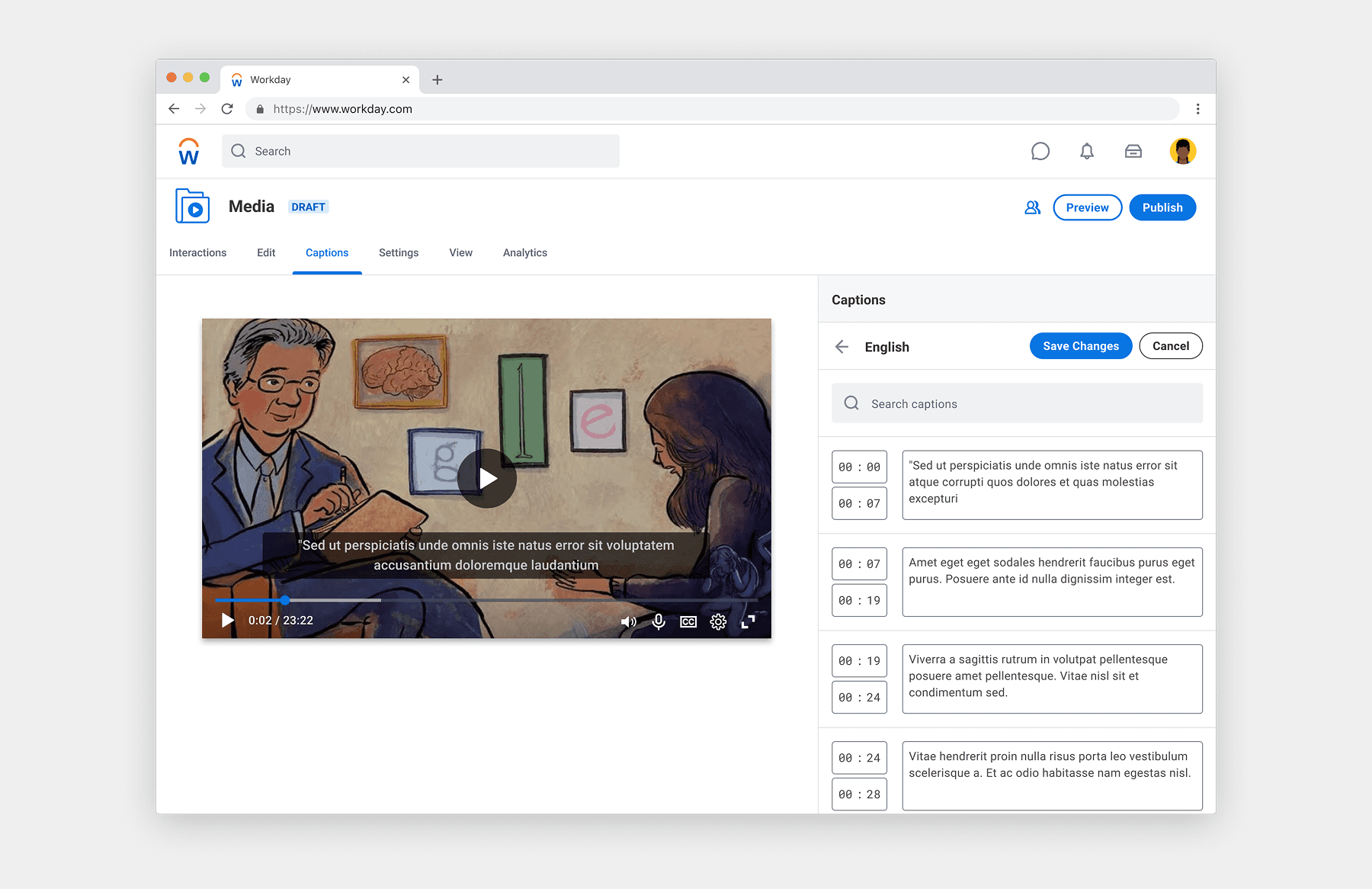
The contextual panel for editing captions in different languages allowing for more robust multi-language support
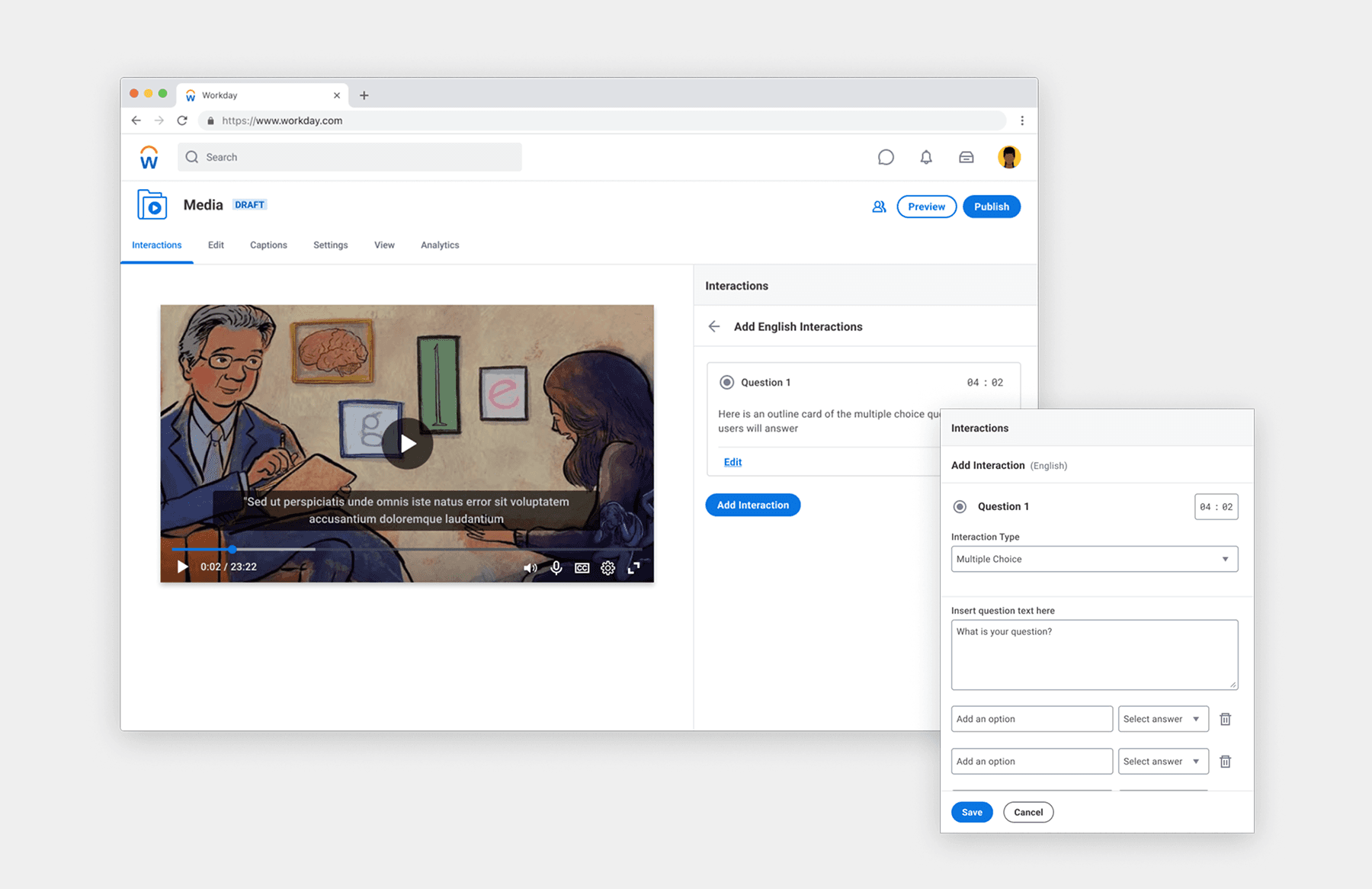
The Interactions panel view with the list of interactions and a pop-out of the Add Interactions panel
The designs weren't the issue. The story was.
Getting director approval took three attempts. The first two were rejected — not because of the designs, but because we hadn't tied the work to a single, defensible business goal. On the third pitch, we led with one use case: multi-language transcription and caption support, directly connected to Workday's push to expand its global user base.
Validated and roadmap-ready
That framing got us approved. Usability testing with 3–5 users returned positive results. The project was slated for the roadmap — and deprioritized later that year due to org-wide restructuring in response to macroeconomic conditions, not due to the design or business case.